


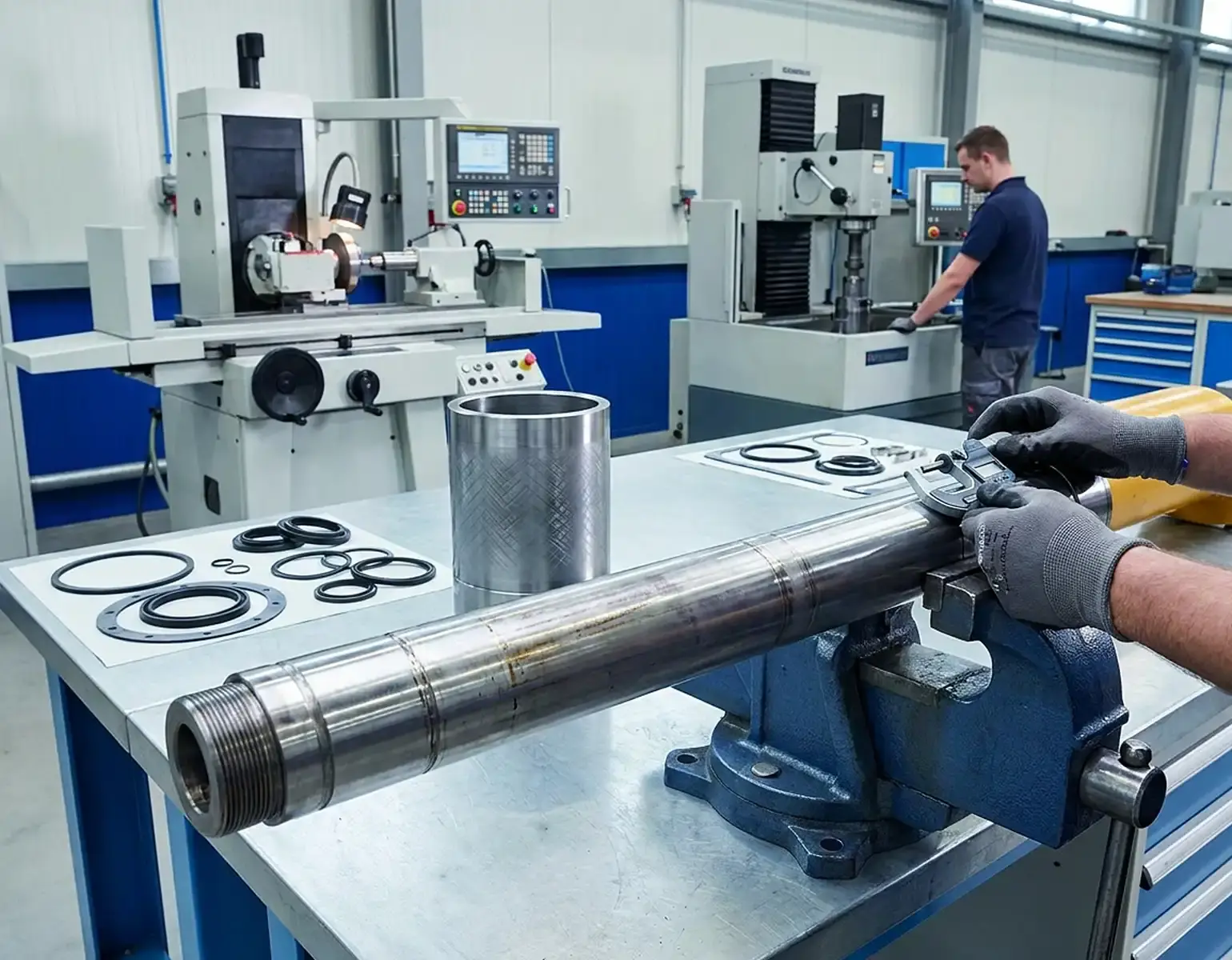
Hydraulic cylinders are built to handle tough conditions, but constant use will eventually take a toll. Worn piston rods, damaged seals, corrosion and internal wear can all affect performance, leading to slower operation, oil leaks and unplanned downtime.
When this occurs, getting a new cylinder isn’t always the best option. A professional repair can often get the component back to reliable working condition for a fraction of the cost of a replacement.
If your hydraulic cylinder is showing signs of wear, understanding the repair process can help you make the right decision – whether that’s restoring the existing component or replacing it when necessary.
Repair or Replace - What's the Better Option?
A damaged hydraulic cylinder doesn’t always need to be replaced. Unless the component is beyond repair, restoration is often the more practical and economical choice.
A quality repair can:
- Reduce equipment downtime
- Extend the life of existing components
- Avoid the cost of purchasing new parts
- Restore reliable hydraulic performance
- Get machinery back into service sooner
For many businesses across construction, manufacturing, mining and agriculture, repairing a hydraulic cylinder simply makes better financial sense.
What Does Hydraulic Cylinder Repair Involve?
A proper hydraulic cylinder repair is more than replacing seals. Each component is inspected to identify wear, damage and the cause of the failure before the repair work begins.
Depending on the condition of the cylinder, the process may include:
Inspection and Assessment
Every cylinder is dismantled and checked for worn rods, scored barrels, damaged threads, bent components and seal failure. This allows engineers to determine the most suitable repair solution.
Precision Grinding
If the piston rod has surface damage or wear, precision grinding restores it to the required size and finish. This is an important step in achieving proper sealing and reliable performance.
Industrial Hard Chrome Plating
Where additional material needs to be rebuilt, industrial hard chrome plating restores worn surfaces while improving wear resistance and corrosion protection. Once plated, the rod is precision ground again to achieve the required tolerance.
Honing the Cylinder Barrel
If the internal bore has minor wear or scoring, precision honing improves the surface finish, helping new seals perform correctly and reducing the risk of internal leakage.
Assembly and Pressure Testing
Once repairs are complete, the cylinder is reassembled with new seals and tested to ensure it operates smoothly and holds pressure before returning to service.
Signs Your Hydraulic Cylinder Needs Attention
Small issues can quickly lead to bigger repairs if they’re ignored. Common signs that a hydraulic cylinder should be inspected include:
- Oil leaking around the seals
- Slow or uneven cylinder movement
- Scored or corroded piston rods
- Reduced lifting or pushing force
- Unusual noises during operation
- Visible damage to the rod or barrel
Early repairs often prevent more extensive damage and help minimise downtime.
Why Choose S F Manufacturing for Hydraulic Cylinder Repair?
At S F Manufacturing, we provide expert hydraulic cylinder repair for businesses across Australia, backed by precision engineering and advanced restoration capabilities. From precision grinding and industrial hard chrome plating to honing and final testing, every repair is done carefully, with accuracy, durability and long-term performance in mind.
Our goal is to restore worn hydraulic cylinders so they can continue performing reliably, helping businesses across Australia reduce downtime and avoid unnecessary replacement costs.
Conclusion
Hydraulic cylinders are a significant investment, and replacing them isn’t always necessary. With the right engineering expertise, worn or damaged cylinders can often be restored to reliable working condition, helping you reduce costs and keep equipment operating efficiently.
If your hydraulic cylinder is showing signs of wear, having it professionally assessed early can save both time and money in the long run.